A lot of international students imagine life in the UK differently before arriving.
Then the first month happens.
You buy groceries “carefully,” tap your bank card a few times for transportation, pay rent, grab food outside once or twice… and suddenly your account balance starts looking uncomfortable.
That’s usually the moment many students realize something important:
Studying in the UK is not just about tuition anymore.
Your monthly living expenses can quietly become the real challenge.
And honestly?
Most students underestimate how much they’ll actually spend before arriving.
Some believe £500 monthly is enough.
Others assume every international student abroad is financially comfortable.
Neither is true.
The reality sits somewhere in the middle, and it depends heavily on your city, spending habits, accommodation, and lifestyle choices.
If you’re planning to study in the UK in 2026, this guide breaks down what international students are really spending monthly without unrealistic social media expectations or exaggerated numbers.
Because understanding the real costs early can save you serious financial stress later.
So, How Much Do International Students Spend Monthly in the UK?
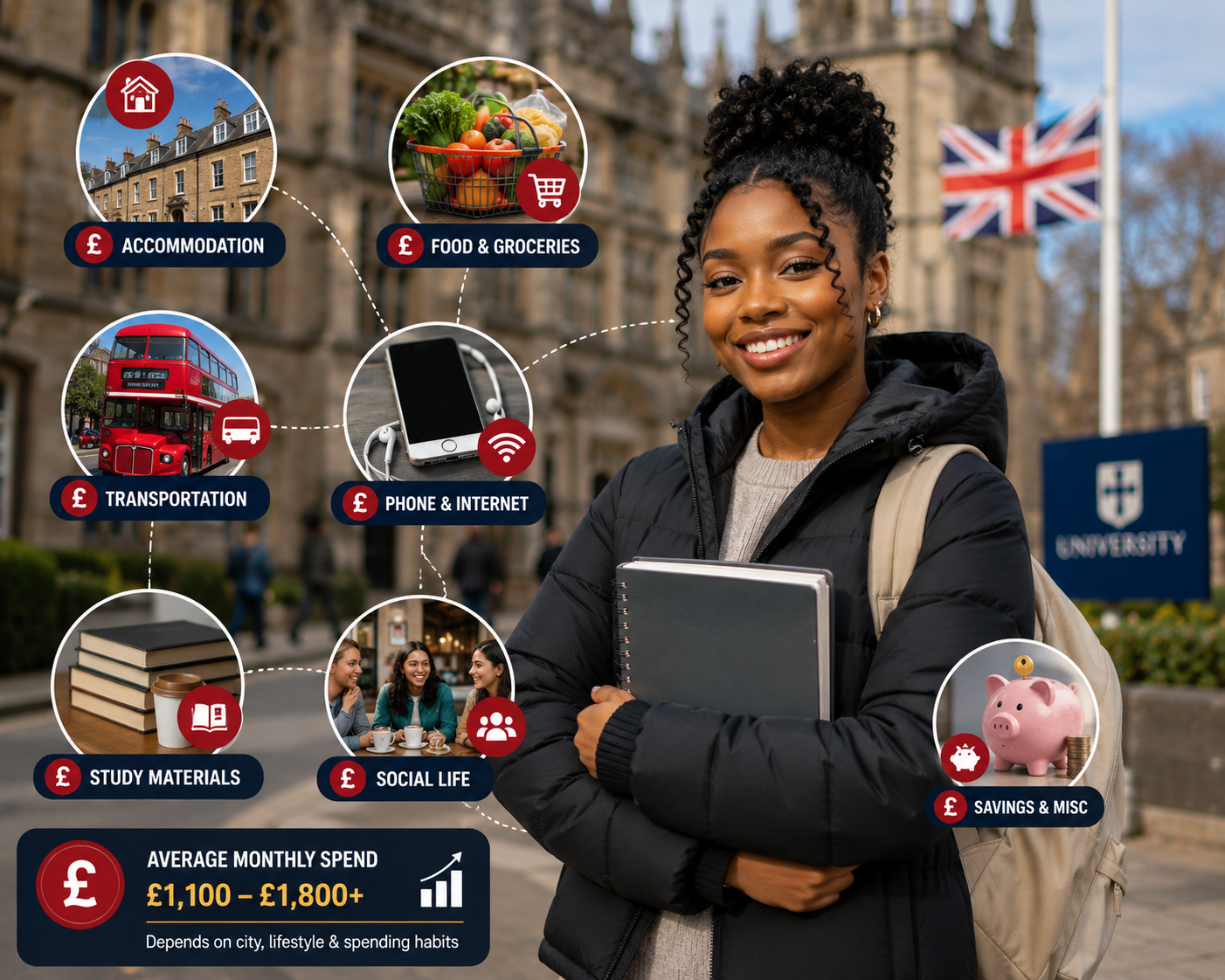
For most international students in the UK in 2026, average monthly living expenses typically range between:
| Lifestyle Type | Estimated Monthly Cost |
|---|---|
| Very Strict Budget | £700 – £1,000 |
| Moderate Student Lifestyle | £1,100 – £1,800 |
| Comfortable Lifestyle | £2,000+ |
Now here’s where things get interesting.
Two students living in the same city can still spend completely different amounts monthly depending on:
- Accommodation type
- Eating habits
- Transportation
- Shopping behavior
- Social lifestyle
- Financial discipline
A student living with roommates in Manchester may spend far less than someone renting privately in central London.
That difference matters a lot.
Accommodation Takes the Biggest Share of Student Budgets
This is where most student money disappears first.
Especially in cities like:
- London
- Birmingham
- Manchester
- Edinburgh
Average monthly accommodation costs in 2026:
| Accommodation Type | Estimated Monthly Rent |
|---|---|
| Shared Apartment | £400 – £900 |
| University Accommodation | £600 – £1,300 |
| Private Apartment | £1,200 – £2,500+ |
And many students forget the extra costs attached to rent:
- Deposits
- Utility bills
- Internet
- Council-related charges in some cases
Some international students arrive expecting a luxury lifestyle immediately.
Then rent quietly consumes most of their monthly budget.
That’s why shared accommodation remains one of the smartest financial survival strategies for students in the UK.
Food Costs Depend Heavily on One Habit
Do you cook… or not?
That single habit changes everything financially.
Students who cook regularly usually spend:
- £150 – £350 monthly on groceries
Students constantly ordering takeout or eating outside may spend:
- £500 – £1,000+ monthly
And honestly, food delivery apps quietly destroy budgets faster than many students realize.
One late-night order here.
Another quick snack there.
By month-end, the total becomes shocking.
Cooking becomes more than a life skill abroad.
It becomes financial protection.
Transportation Costs Add Up Quickly in Bigger Cities
Transportation expenses vary heavily depending on location.
Average monthly transportation costs in 2026:
| Transportation Type | Monthly Estimate |
|---|---|
| Student Bus/Train Pass | £50 – £180 |
| Occasional Uber/Taxi | £80 – £300 |
| Owning a Car | £400 – £1,000+ |
Students living in London usually spend significantly more on transportation compared to smaller cities.
That’s why many experienced students choose accommodation close to campus whenever possible.
It saves both money and stress.
Phone Bills, Internet, and Subscriptions Quietly Drain Money
This category looks harmless initially.
Until everything combines together monthly.
Average digital expenses:
| Expense | Monthly Estimate |
|---|---|
| Mobile Plan | £10 – £40 |
| Internet Share | £20 – £50 |
| Streaming Services | £10 – £60 |
| Apps and Cloud Storage | £5 – £25 |
Small subscriptions rarely feel dangerous individually.
But combined together?
They quietly eat into student budgets monthly.
A lot of financially stable students regularly audit their subscriptions for this reason.
Winter Expenses Catch Many International Students Off Guard
Students from warmer countries often underestimate this badly.
UK winters may not always be as extreme as Canada, but proper winter clothing still matters.
Many international students spend:
- £150 – £700+ initially
This may include:
- Winter jackets
- Boots
- Hoodies
- Thermal wear
- Rain friendly clothing
And because many students arrive unprepared, these expenses often happen suddenly during colder months.
Social Life Is One of the Biggest Hidden Expenses
This part rarely gets discussed honestly.
A lot of students overspend socially because they don’t want to feel isolated abroad.
Things like:
- Restaurants
- Coffee shops
- Clubbing
- Weekend trips
- Shopping
- Random outings
…can quietly consume hundreds monthly.
And because social media constantly creates pressure, some students start spending beyond their actual financial capacity.
Students who survive best financially usually understand one thing early:
You do not need to “look successful” immediately abroad.
Why Some International Students Always Seem Financially Stable
Interestingly, it’s not always because they’re wealthy.
Many students simply build smarter habits early.
They:
- Cook regularly
- Share accommodation
- Track expenses
- Budget weekly
- Avoid emotional spending
- Buy second-hand items
- Control unnecessary lifestyle pressure
Those habits compound over time.
And eventually, life abroad becomes easier financially.
Can Part-Time Jobs Cover Living Expenses in the UK?
Sometimes partially.
Part-time jobs can help students cover:
- Food
- Transportation
- Personal expenses
- Some accommodation costs
But relying entirely on part-time jobs immediately after arrival can become risky.
Because:
- Job opportunities may take time
- Competition can be high
- Academic schedules matter
- Work hours are limited for many students
This is why financial preparation before arriving in the UK still matters heavily in 2026.
The Most Expensive UK Cities for International Students
Generally, students spend more monthly in:
- London
- Oxford
- Cambridge
- Edinburgh
More affordable student cities often include:
- Sheffield
- Leicester
- Coventry
- Liverpool
- Nottingham
Your city choice alone can dramatically affect your yearly expenses.
The Biggest Financial Mistake International Students Make in the UK
Trying to live comfortably too quickly.
That’s the trap.
Some students arrive abroad and immediately want:
- Expensive apartments
- Constant outings
- Luxury gadgets
- Designer shopping
- A “soft life” lifestyle online
Then financial pressure slowly follows.
The students who survive best financially usually focus on:
- Stability first
- Comfort later
That mindset alone saves people from serious stress abroad.
Finally:
Living in the UK as an international student in 2026 is expensive.
There’s no reason pretending otherwise.
But it’s still manageable with discipline, realistic expectations, and smart financial habits.
The students who adapt best financially are usually not the loudest online.
They’re often the students quietly budgeting, cooking, adjusting gradually, and building stability behind the scenes.
Your first year abroad does not need to look glamorous immediately.
It simply needs to be sustainable.
And once your finances become stable, everything else abroad starts feeling much easier too.
FAQs:
1. How much money do international students spend monthly in the UK in 2026?
Most international students spend between £1,100 and £1,800 monthly depending on their city, accommodation, and lifestyle.
2. What is the biggest monthly expense for students in the UK?
Accommodation is usually the biggest expense. Rent can range from £400 for shared housing to over £2,500 for private apartments in expensive cities like London.
3. Is the UK expensive for international students?
Yes, especially in cities like London and Edinburgh. However, students who budget carefully and avoid unnecessary spending usually manage comfortably.
4. How much do students spend on food monthly in the UK?
Students who cook regularly often spend between £150 and £350 monthly, while students constantly eating outside may spend much more.
5. Can international students survive in the UK with part-time jobs?
Part-time jobs can help cover personal expenses and part of living costs, but relying entirely on them immediately after arrival is risky.
6. Which UK cities are more affordable for international students?
Cities like Sheffield, Coventry, Leicester, Liverpool, and Nottingham are generally more affordable than London or Oxford.
7. How much do transportation costs average monthly in the UK?
Most students spend between £50 and £180 monthly on public transportation depending on the city.
8. Why do many international students struggle financially in the UK?
Many underestimate hidden expenses like rent deposits, transportation, subscriptions, winter clothing, and emotional spending.
9. Is shared accommodation better for students in the UK?
For many students, yes. Shared accommodation reduces monthly rent costs significantly and helps students adjust financially.
10. How can international students reduce living expenses in the UK?
Students can save money by:
- Cooking regularly
- Sharing accommodation
- Tracking expenses
- Buying second-hand items
- Avoiding emotional spending
- Using student discounts whenever possible