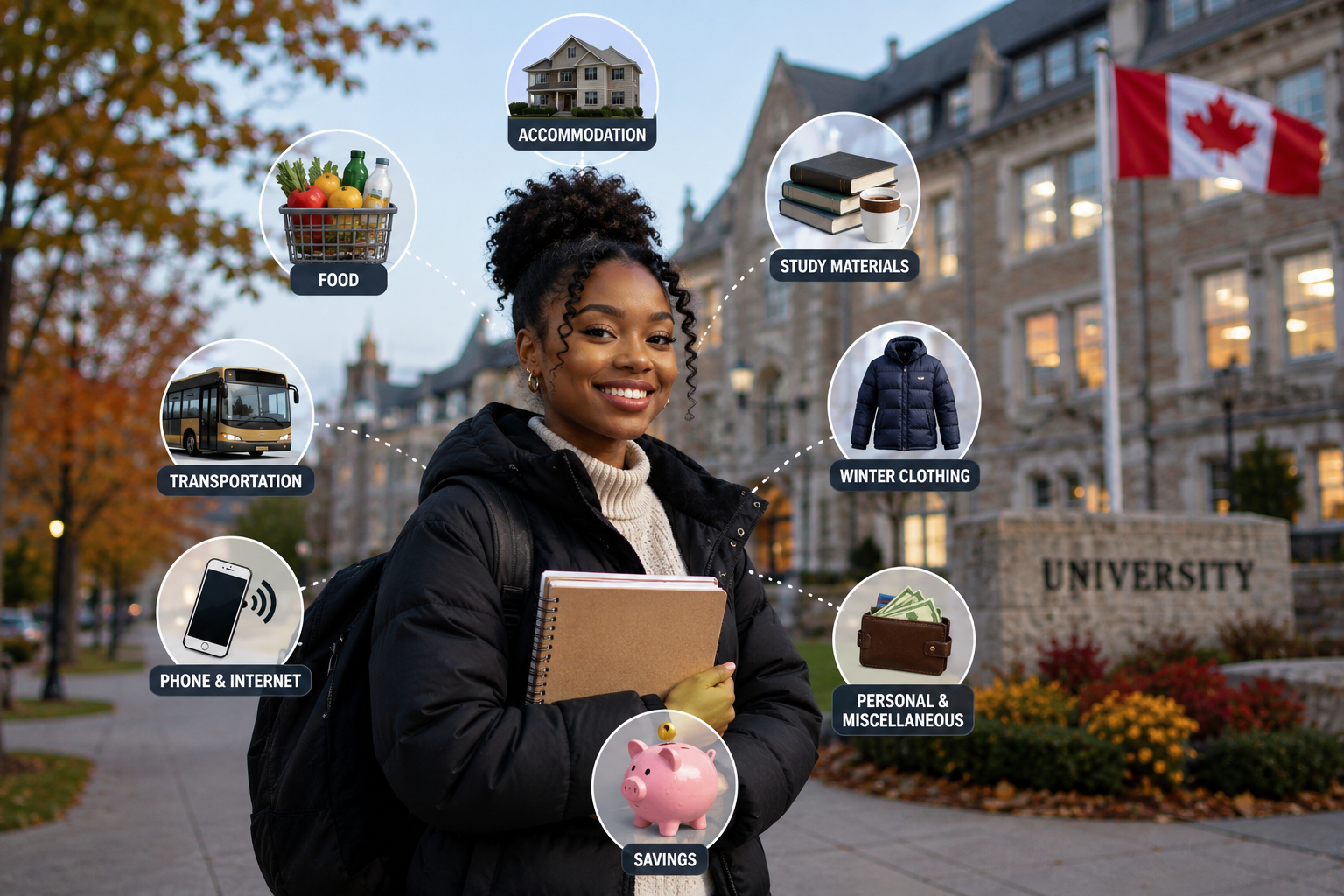
A lot of students imagine life in Canada one way before arriving.
Then reality shows up during the first grocery run.
You walk into a supermarket thinking you’ll buy “just a few things,” and somehow your basket quietly turns into CAD $85.
That’s usually the moment many international students realize something important:
Living in Canada is not only about tuition fees anymore.
Your monthly survival costs can either feel manageable… or completely overwhelming depending on where you live, how you spend, and the habits you develop early.
And honestly?
Most students underestimate their real monthly expenses before arriving.
Some assume CAD $500 monthly is enough.
Others think everyone abroad is secretly rich.
Neither is true.
The reality sits somewhere in the middle.
If you’re planning to study in Canada in 2026, this guide breaks down what international students are actually spending monthly without unrealistic social media expectations or exaggerated numbers.
Because knowing the real costs early can save you from financial panic later.
So, How Much Do International Students Spend Monthly in Canada?
For most international students in Canada in 2026, average monthly living expenses typically range between:
| Lifestyle Type | Estimated Monthly Cost |
|---|---|
| Very Strict Budget | CAD $900 – $1,300 |
| Moderate Student Lifestyle | CAD $1,400 – $2,200 |
| Comfortable Lifestyle | CAD $2,500+ |
Now here’s where things get interesting.
Two students living in the same city can spend completely different amounts monthly depending on:
- Accommodation type
- Food habits
- Transportation
- Social lifestyle
- Shopping behavior
- Province or city
A student living quietly with roommates in Winnipeg will likely spend far less than someone renting privately in downtown Toronto.
That difference matters a lot.
Accommodation Is Usually the Biggest Expense
This is where most student money disappears first.
In cities like:
- Toronto
- Vancouver
- Ottawa
- Calgary
…rent can become extremely expensive quickly.
Average monthly accommodation costs in 2026:
| Accommodation Type | Estimated Monthly Rent |
|---|---|
| Shared Apartment | CAD $500 – $1,000 |
| Student Residence | CAD $800 – $1,500 |
| Private Apartment | CAD $1,600 – $2,800+ |
And remember, many landlords also request:
- Security deposits
- Utility payments
- Internet setup fees
Some students arrive in Canada expecting luxury apartments immediately.
Then rent quietly starts consuming most of their monthly budget.
That’s why many experienced international students recommend shared accommodation during your first year.
Not glamorous.
But financially smarter.
Food Costs Shock Many Students Initially
This catches almost everybody off guard.
Especially students converting every grocery bill into their local currency mentally.
In Canada, monthly food expenses usually depend on one simple thing:
Do you cook regularly… or not?
Students who cook consistently often spend:
- CAD $250 – $500 monthly
Students constantly eating outside may spend:
- CAD $700 – $1,400 monthly
And honestly, eating out in Canada adds up fast.
A few restaurant visits weekly can quietly destroy your budget before month-end.
That’s why cooking becomes more than a life skill abroad.
It becomes financial survival.
Transportation Costs Depend on Your City
Transportation expenses vary heavily across provinces and cities.
Average student transportation costs in 2026:
| Transportation Type | Monthly Estimate |
|---|---|
| Student Transit Pass | CAD $80 – $180 |
| Occasional Uber/Taxi | CAD $100 – $400 |
| Owning a Car | CAD $500 – $1,200+ |
A lot of students initially underestimate transportation costs.
Then winter arrives.
Suddenly, walking everywhere becomes less realistic.
Cities with strong public transport systems usually help students save significantly.
Internet, Phone Bills, and Subscriptions Add Up Quietly
This category looks harmless initially.
Until you combine everything together.
Average monthly digital expenses:
| Expense | Monthly Estimate |
|---|---|
| Mobile Plan | CAD $40 – $90 |
| Internet Share | CAD $30 – $80 |
| Streaming Services | CAD $10 – $50 |
| Cloud Storage/Apps | CAD $5 – $30 |
Small subscriptions quietly accumulate.
That’s why many students eventually start auditing their monthly recurring expenses carefully.
Winter Clothing Can Become an Unexpected Financial Shock
Students from warmer countries often underestimate this expense badly.
Canadian winters are not something you “manage somehow” with light hoodies.
Good winter clothing matters.
Especially in provinces with intense cold conditions.
Many students spend:
- CAD $250 – $900+ initially on winter essentials
This may include:
- Winter jackets
- Boots
- Gloves
- Thermal wear
- Snow-friendly clothing
The good news?
You usually don’t buy these monthly.
Still, during your first year, it becomes one of the biggest unexpected expenses for many international students.
Social Life and Entertainment Quietly Affect Budgets
This part rarely gets discussed honestly.
A lot of students overspend socially abroad because they don’t want to feel isolated.
Things like:
- Weekend outings
- Restaurants
- Clubbing
- Shopping
- Coffee runs
- Random impulse spending
…can quietly consume hundreds monthly.
Some students survive comfortably abroad mainly because they control lifestyle inflation early.
Not because they earn more.
That difference matters.
Why Some Students Always Seem Financially Comfortable
Interestingly, it’s not always about family wealth.
Many financially stable students abroad simply develop better habits early.
They:
- Cook consistently
- Share accommodation
- Budget weekly
- Avoid emotional spending
- Track expenses
- Buy second-hand items
- Avoid unnecessary pressure
Those habits compound over time.
And eventually, life feels easier financially.
Can International Students Work and Cover Monthly Expenses?
Sometimes yes.
Sometimes partially.
Part-time jobs in Canada can help students manage:
- Food
- Transportation
- Personal expenses
- Some rent support
But relying entirely on part-time work for survival immediately after arrival is risky.
Because:
- Jobs may take time
- Competition can be high
- Work schedules vary
- Academic pressure matters
This is why financial preparation before arrival still matters heavily in 2026.
The Cities Where Students Spend the Most Money
Generally, international students spend more monthly in:
- Toronto
- Vancouver
- Mississauga
- Victoria
Meanwhile, more affordable student cities often include:
- Winnipeg
- Regina
- Saskatoon
- Halifax
- Edmonton
Your city choice alone can change your yearly expenses dramatically.
The Biggest Financial Mistake International Students Make in Canada
Trying to “live comfortably” too quickly.
That’s the trap.
Some students arrive and immediately want:
- Luxury apartments
- Frequent outings
- Expensive gadgets
- Constant shopping
- A social media lifestyle
Then financial pressure quietly follows.
Students who survive best financially usually focus on:
- Stability first
- Comfort later
That simple mindset saves people more money than complicated budgeting apps sometimes do.
Finally:
Living in Canada as an international student in 2026 is expensive.
There’s no point pretending otherwise.
But it’s also manageable with proper planning and disciplined habits.
The students who adapt best financially are usually not the ones showing off online constantly.
They’re often the students quietly budgeting, cooking, adjusting gradually, and building stability behind the scenes.
Your first year abroad does not need to look glamorous immediately.
It simply needs to be sustainable.
And once your finances become stable, everything else abroad starts feeling much easier too.
FAQs:
1. How much money do international students need monthly in Canada in 2026?
Most international students in Canada spend between CAD $1,400 and CAD $2,200 monthly depending on the city, accommodation type, and lifestyle.
2. What is the biggest monthly expense for students in Canada?
Accommodation is usually the biggest expense. Rent alone can range from CAD $500 for shared apartments to over CAD $2,500 for private apartments in expensive cities like Toronto or Vancouver.
3. Is Canada expensive for international students in 2026?
Yes, Canada has become more expensive in recent years, especially in major cities. However, students who budget properly and avoid unnecessary spending can still manage their finances comfortably.
4. How much do students spend on food monthly in Canada?
Students who cook regularly often spend around CAD $250 to CAD $500 monthly on groceries. Those who eat outside frequently may spend over CAD $1,000 monthly.
5. Can international students survive in Canada with part-time jobs?
Part-time jobs can help cover personal expenses, groceries, transportation, and part of rent. Still, relying entirely on part-time income immediately after arrival can be risky.
6. Which Canadian cities are cheaper for international students?
Cities like Winnipeg, Regina, Saskatoon, Halifax, and Edmonton are generally more affordable compared to Toronto or Vancouver.
7. How much do transportation costs average monthly in Canada?
Most students spend between CAD $80 and CAD $180 monthly on public transportation depending on the city and transit system.
8. Why do many international students struggle financially in Canada?
Many students underestimate hidden expenses like rent deposits, winter clothing, transportation, subscriptions, and emotional spending.
9. Is shared accommodation better for students in Canada?
For many students, yes. Shared accommodation helps reduce monthly expenses significantly and makes it easier to adjust financially during the first year.
10. How can international students reduce monthly expenses in Canada?
Students can save money by:
- Cooking at home regularly
- Sharing accommodation
- Using public transport
- Buying second-hand items
- Avoiding emotional spending
- Tracking monthly expenses carefully
11. How much should students budget for winter clothing in Canada?
Many international students spend between CAD $250 and CAD $900 during their first winter buying jackets, boots, gloves, and thermal clothing.
12. Do international students in Canada pay for healthcare separately?
This depends on the province and school. Some provinces offer healthcare coverage for international students, while others require private insurance through the university or external providers.